Our extra-curricular programme is an integral part of our positive school culture, offering students a wide range of opportunities to explore their interests, develop new skills and build confidence. Staff generously give their time to lead a variety of clubs, activities and trips, ensuring a well-balanced provision that caters to a broad range of interests, from creative and leisure pursuits to sport and outdoor education.
Rushey Mead students benefit from an extensive range of clubs and enrichment opportunities. These activities not only provide enjoyment but also enable students to build positive relationships and develop a strong sense of community. The breadth of provision supports the development of key skills such as leadership, teamwork, organisation and problem-solving.
Attendance and engagement are monitored termly, with a particular focus on supporting disadvantaged students and those with SEND, ensuring equitable access for all. All clubs are free to attend, and some provide discreet, targeted support to meet individual needs. For example, homework clubs support students in completing tasks effectively, while enrichment activities such as MasterChef-style cookery provide valuable experiences for specific groups, including young carers.
The Physical Education faculty offers students the opportunity to participate in both competitive and recreational activities. Regardless of prior experience or ability, there is inclusive provision for all. Sports available include basketball, football, netball, cricket, rugby, tennis, badminton and fitness development. Outdoor and physical activity clubs also help address the limited access some students may have to safe green spaces, providing enriching experiences within a secure environment.
There are also extensive opportunities for students to engage in the performing arts. Dance, drama and music are well attended. Students can learn to play instruments such as keyboards, take part in singing or drumming lessons, or collaborate as part of a band.
Students across all year groups are encouraged to take part in a variety of leadership opportunities. These are embedded across the school, with some activities taking place within faculties, while others are offered as extra-curricular experiences, including initiatives. In addition, students can participate in the Duke of Edinburgh Award, further developing resilience, independence and teamwork through volunteering, physical activity and expedition.
The Leadership Log is designed to support students in developing a broad range of personal skills and qualities beyond academic achievement. It also provides valuable evidence that students can draw upon when preparing CVs or attending college interviews. As part of this process, students are encouraged to reflect on how they have demonstrated and developed key attributes upon completing Stage 4.
All extra-curricular activities contribute towards the Rushey 3 Passport, recognising and celebrating students’ wider engagement, personal development and well-being. This inclusive, varied and purposeful programme complements the wider curriculum and supports students in becoming confident, well-rounded individuals.
Rushey 3 Overview
Rushey 3 stands for ‘Develop your whole self’. In practice, this means we want students to achieve more than just academic excellence. We encourage all students to develop themselves through our extra-curricular provision, so that they leave Rushey Mead Academy as well-rounded citizens who are equipped with the skills they need for life.
We want them to develop their leadership skills, sporting talent, musical and dramatic ability. We expect them to raise money for charity and challenge themselves to try something new and unfamiliar. Collectively, these experiences develop a broad range of transferable skills that support students in securing rewarding employment and thriving in adult life.
At Rushey Mead all students, teachers and parents share a common vision to “Make A Positive Difference”.
This underpins everything we do and helps us to achieve the best outcomes for all students.
Every day at Rushey Mead we work together to Make A Positive Difference.
- To ourselves. We support students to achieve the highest standards, not just in lessons and examinations, but also in extra-curricular activities. We encourage them to consider their behaviour and to understand how this behaviour makes a positive difference to them and their future prospects. Every individual truly matters, and we support them to be the best they can be.
- To others. Students at Rushey Mead consider their place in society and understand what it means to be a good citizen. The academy is extensively involved in charitable activity and students fully participate not only in fundraising for good causes but also in actively helping others. The development of leadership skills for students is an important focus for the academy through our “Compass” student leadership scheme. On a daily basis staff and students support one another and their peers to mutual success.
- To our world. Every day we encourage all members of our learning community to respect their surroundings and make sustainable choices for the future. We take collective responsibility to make Rushey Mead, Leicester and the wider world a better place.
All activities are logged on the Rushey Mead Passport
Embedding Our Values Through Behaviour and Culture
To ensure that these expectations are lived consistently across the school, we use a whole-school approach that includes:
- Staff induction and handbook – All staff receive detailed guidance on our shared language, expectations and approaches. This ensures consistency in how we reinforce positive behaviour and guide students to make better choices when needed.
- Weekly behaviour and culture focus – Each week, staff are given a specific aspect of our Rushey SMART behaviour expectations to highlight and model. This creates a strong, unified culture in which everyone is focused on developing the same habits.
- Morning addresses and assemblies – Year Teams use a consistent language and shared messages when addressing students, reinforcing the same expectations, routines and values. Assemblies throughout the year follow a calendar that aligns with our Rushey 1-2-3 values.
- Positive reinforcement – Through our rewards system, praise, and recognition in assemblies, students are encouraged to reflect on how their behaviour and actions make a positive difference.
Rushey 3 Passport and Graduation

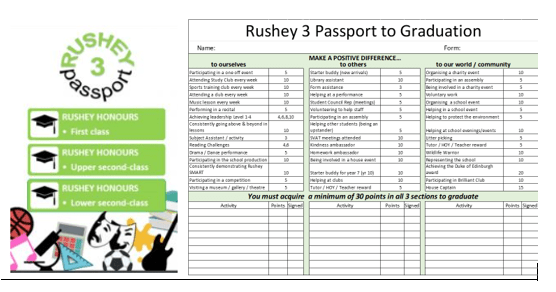
The Rushey 3 Passport is designed to encourage students to engage in a wide range of activities beyond the classroom, ensuring they are actively prepared for all aspects of life, not just academic success. The passport supports the development of character, leadership, and other non-cognitive skills that underpin effective learning and personal growth.
Students accumulate points by participating in and committing to a variety of clubs, activities, and opportunities. The number of points awarded reflects the level of commitment required for each activity, which may include:
- Participating in the Duke of Edinburgh scheme
- Contributing to assemblies
- Serving as a student councillor
- Taking part in drama, music, or other performances
The Rushey 3 Passport aligns with the school ethos of “Making a Positive Difference” to oneself, others and the wider community. It is structured around three corresponding areas, and students are encouraged to develop their character in a balanced and meaningful way by earning points across all three in order to graduate.
Students record their involvement in the table at the bottom of their passport, which must be signed by the relevant member of staff. Throughout the year, passport ‘drops’ take place during Rushey 3 tutor time sessions. During these sessions, students reflect on their progress, while form tutors log passport points on Bromcom. The form group in each year achieving the highest percentage of engagement is recognised with a form-time breakfast, promoting healthy competition and sustained motivation. Following the logging of points, the three students with the highest total in each year group are awarded a Rushey 3 certificate and 20 house points, helping to build momentum towards graduation each term.
Graduation
In the final term, once all Passport points have been logged, students are allocated a level of graduation based entirely on their Rushey 3 achievements. This celebration recognises engagement, commitment, and success in extracurricular activities, rather than academic performance.
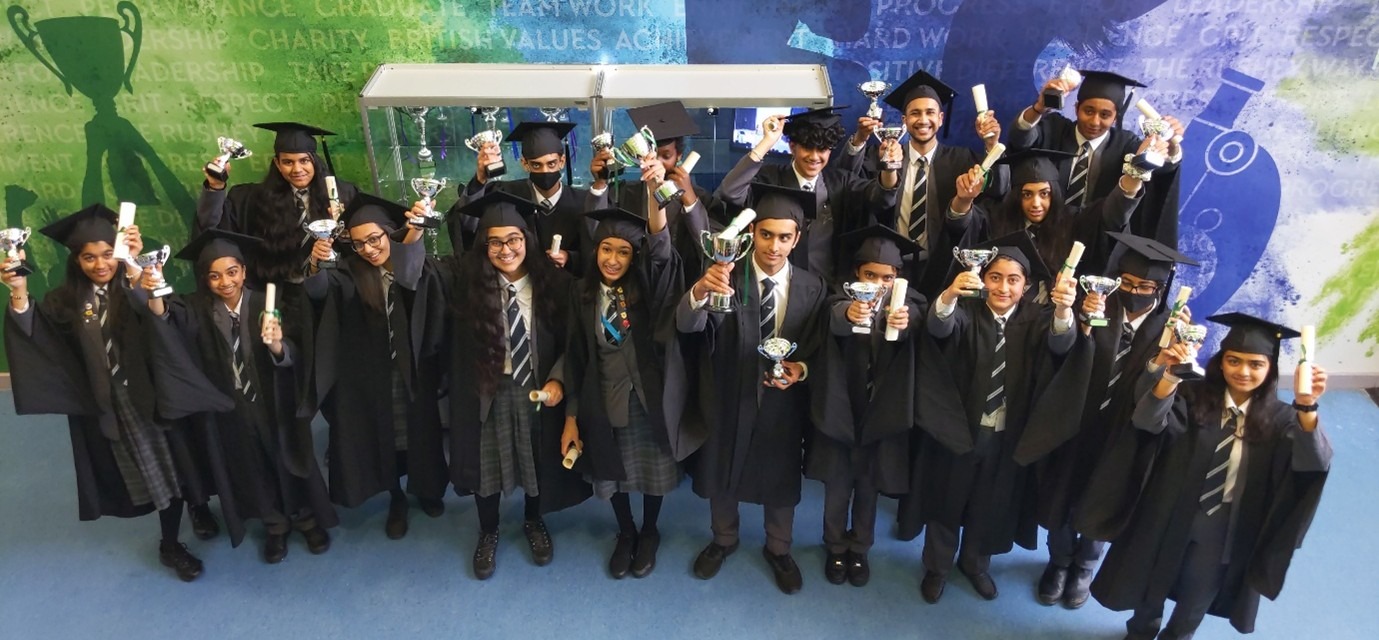
A graduation ceremony is held at the end of the year to celebrate these outstanding achievements. Parents and families are invited to join the festivities, as students walk the stage complete with graduation gown and mortarboard to receive their trophies. The evening is a joyful celebration of talent and commitment, featuring performances from the school choir and musicians.
Graduation is awarded at three levels to recognise differing levels of sustained engagement and commitment. To qualify for graduation, students must achieve a minimum of 30 points in each of the three passport categories, ensuring balanced participation and character development across all areas.
Points thresholds are standardised by year group to ensure fairness and progression. Once thresholds are met, students are ranked within their year group based on their total points, allowing awards to recognise both breadth and depth of engagement.
First-Class Rushey Honours and Upper Second-Class Rushey Honours are awarded to the highest-ranking students in each year group. Students achieving these levels are invited to attend the Rushey 3 graduation ceremony, where they wear a graduation gown and mortarboard and receive a trophy, certificate scroll and graduation pin badge.
Second-Class Rushey Honours recognises students who meet the graduation criteria but do not place within the highest rankings. These students are celebrated in assembly and receive a certificate and graduation pin badge in recognition of their achievement.
Additionally, in consultation with the Year Team, two top-performing graduates from each year group are nominated to receive the ‘Graduate of the Year’ trophies. The Head of Year presents these awards and delivers a personal speech highlighting the student’s outstanding achievements and the reasons for their selection.
Student Leadership
At Rushey Mead Academy, student leadership is an integral part of developing character, responsibility, and confidence. Opportunities are designed to give students practical experience in leading, supporting their peers, and contributing positively to school life. Leadership activities are recognised through a progressive badge system, which encourages students to build skills, take initiative, and participate in multiple activities, regardless of whether they have already earned a badge. The programme is overseen by the Lead Teacher of Student Leadership, a TLR position, who coordinates opportunities, monitors progress and ensures that all students have the support and guidance needed to thrive as young leaders.
Leadership Badge System
Students can earn Stage 1 to Stage 4 Leadership Badges by completing designated leadership activities. Badges are awarded progressively, from Stage 1 to Stage 4, though students are encouraged to participate in activities even after earning a badge.
- Stage 1 Badge: Complete three Stage 1 activities.
- Stage 2 Badge: Complete a Stage 2 activity and already have a Stage 1 badge.
- Stage 3 Badge: Complete a Stage 3 activity and already have Stage 1 and 2 badges.
- Stage 4 Badge: Complete a Stage 4 activity and already have Stage 1, 2, and 3 badges.
Leadership Opportunities
Students can engage in a variety of roles and initiatives to develop their leadership skills:
- Kindness Ambassadors – Selected through an application process, Kindness Ambassadors support and promote acts of kindness across the school. They deliver presentations and act as friendly, approachable faces during breaks and lunchtimes, with a designated area and rota so they are available for students to chat to and seek support. A selected cohort of Kindness Ambassadors has received additional training, completing a Youth Mental Health course, and now forms a student task force that develops ideas to promote positive mental health across the year group.
- Starter Buddies (Year 10) – Assist with transition days and summer school, introducing new students to the Rushey 1-2-3 expectations and guiding them through their first experiences of school. They also deliver targeted support sessions throughout students’ first term at Rushey, visiting forms to share key messages about how to get the most out of their time at the school.
- Student Council – Two elected representatives per year serve a two-year term. Council members produce a manifesto and are elected through a school-wide ballot. Meetings provide a platform for students to discuss school issues, gather feedback, and influence decision-making by presenting ideas to SLT. They also represent the school at trust-wide events, collaborating with student leaders from other schools.
- Student Voice Action Team – are a voluntary group that play an active role in promoting wellbeing, sustainability, community engagement and positive school culture. Since the start of the year, students have organised a Halloween quiz in the library and created a recycling awareness video. They have prepared for and delivered contributions to an Eco Conference. The group has also undertaken practical projects around the school, including sorting gardening equipment, creating pen recycling boxes, and producing Christmas Jumper Day donation boxes. Students have supported whole-school and national events by assisting with Remembrance Day poppy activities and running a Kind Bear competition for Year 7. In addition, the team organised an escape room activity for the Year 7 club and took part in community outreach through a visit to a local food bank to deliver food parcels.
Extra-Curricular Activities
At Rushey Mead Academy, our extra-curricular programme is an integral part of our positive school culture, offering students a wide range of opportunities to explore their interests, develop new skills, and build confidence. Staff generously give their time to lead a variety of clubs and trips, ensuring a well-balanced offer that caters to different interests, from creative and leisure activities to sport and outdoor pursuits.
Attendance and engagement are monitored termly, with a particular focus on supporting our PP and SEND students, ensuring equitable access for all. Our outdoor and physical activity clubs also aim to address the limited access some students have to safe green spaces, giving them opportunities to enjoy enriching experiences in a secure environment.
All clubs are free to attend, and some provide discreet support tailored to individual needs. For example, homework clubs support PP and SEND students in completing tasks effectively, while activities such as Masterchef-style cookery offer enrichment primarily for our Young Carers, without being formally advertised.
This approach ensures that our extra-curricular provision is inclusive, varied, and purposeful, complementing the wider school curriculum and contributing to students’ personal development and well-being.
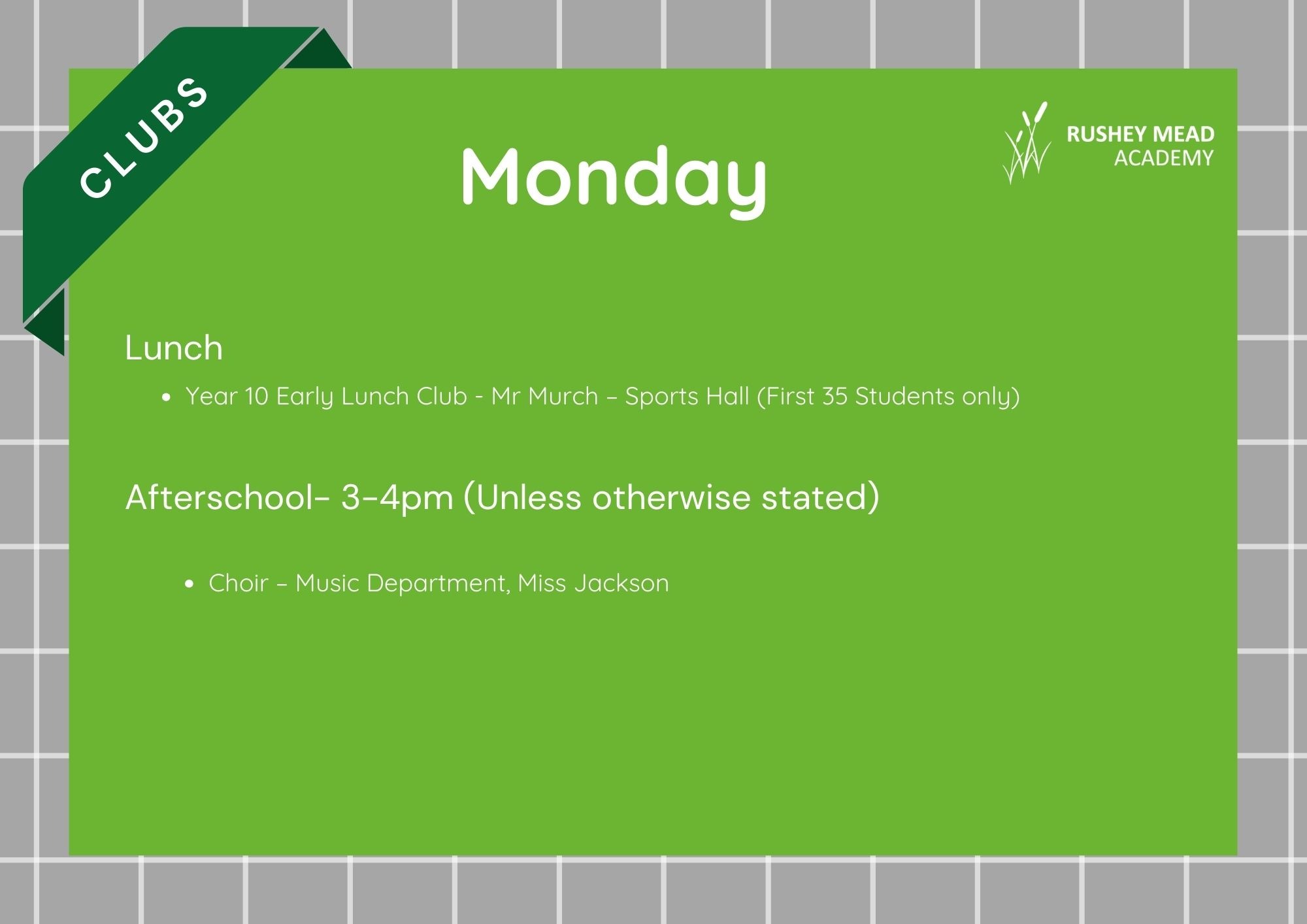
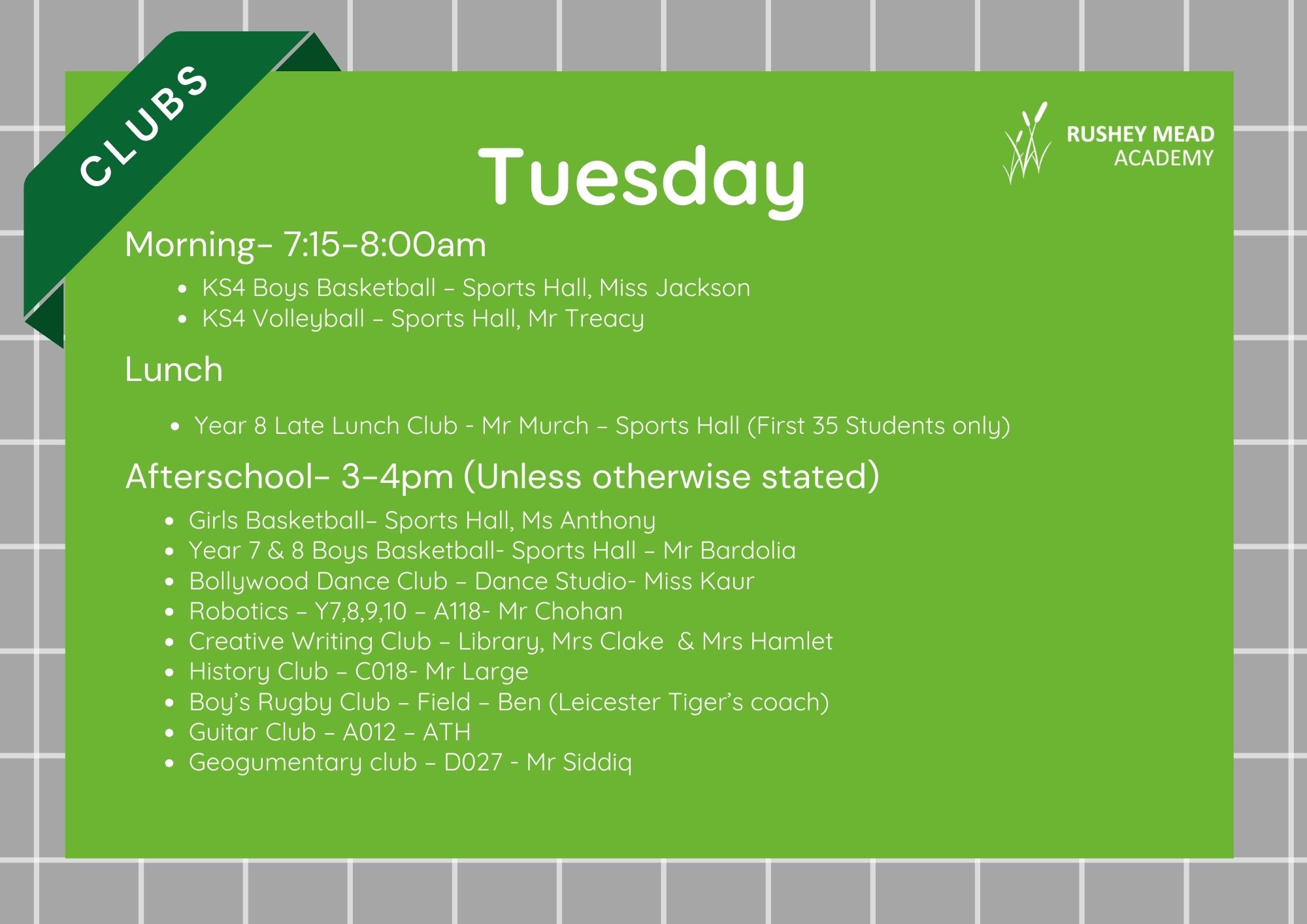
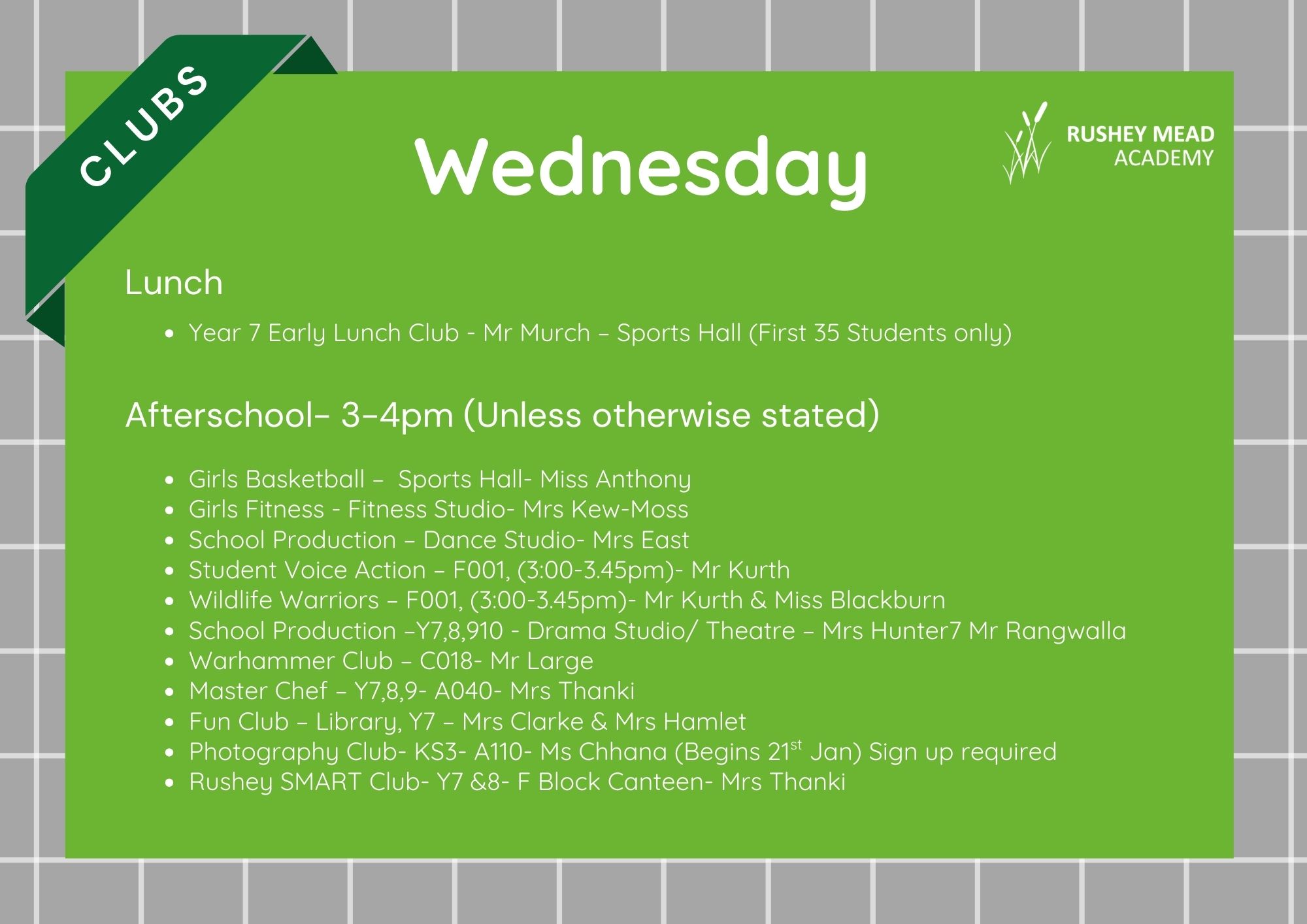
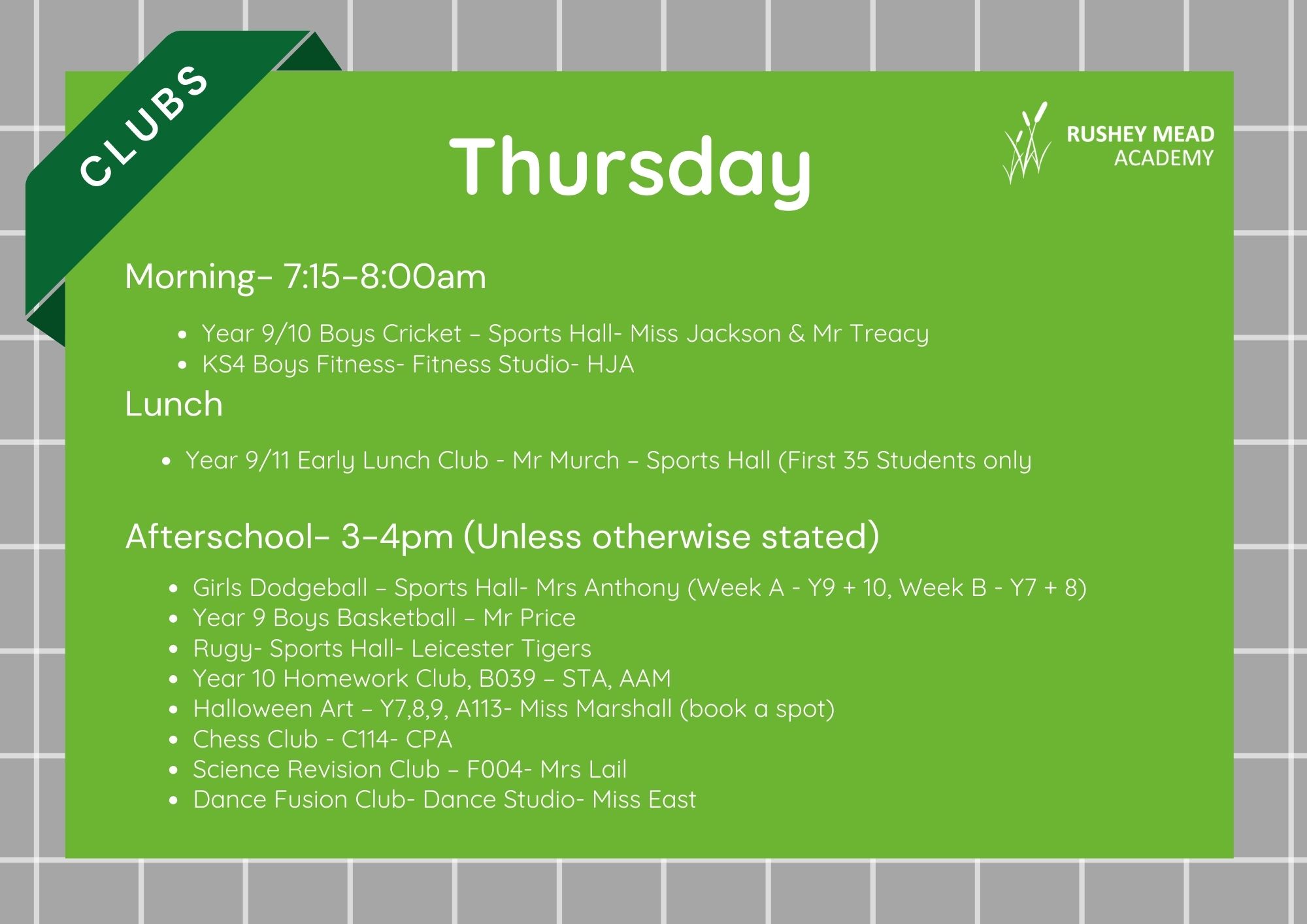
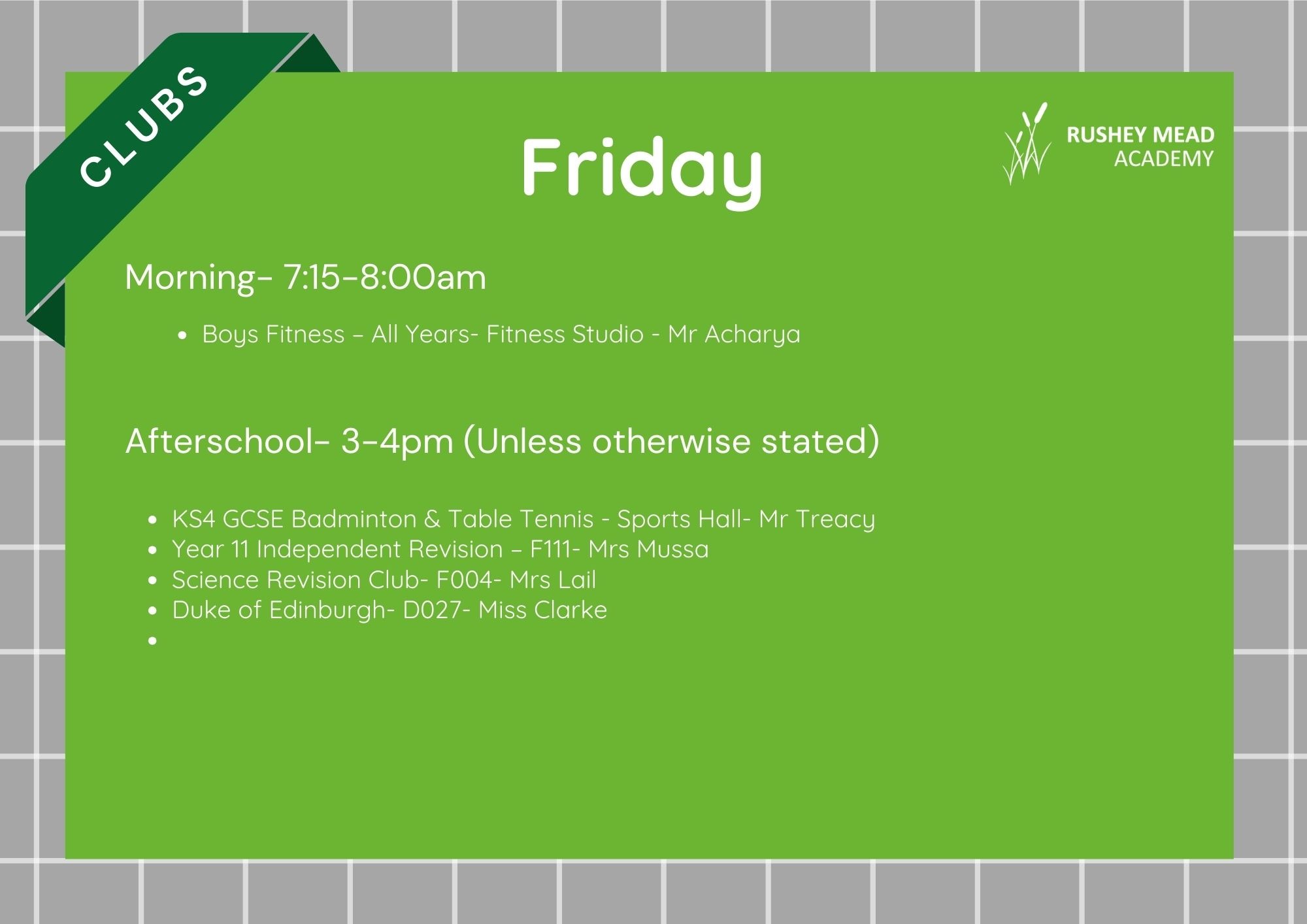
Extra-Curricular Timetable
The House System
The House system is a school-wide competition that involves all students and staff, fostering a sense of community, belonging, and healthy competition. Each tutor group, including both students and their tutor, is assigned to a House, and all staff, both teaching and non-teaching, are also allocated to a House.
The system aims to engage and motivate as many students as possible, providing multiple ways for them to contribute to their House and demonstrate achievement across all areas of school life. There are six distinct areas of competition, each with its own trophy, and all House Points earned also contribute to the overall House Trophy.
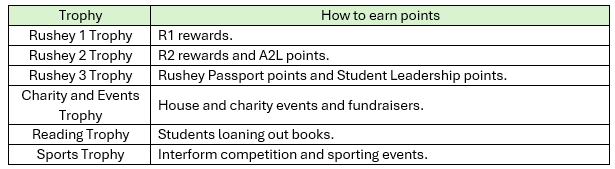
All trophies are proudly displayed outside the Theatre in the trophy cabinet, with the colour ribbons of the winning House tied to each one as a vibrant celebration of achievement. Trophies are presented during the House Celebration event, a lively and spirited occasion where students show their house pride by wearing house colours, cheering enthusiastically, and enjoying music and dance performances from fellow students.

The Six Houses
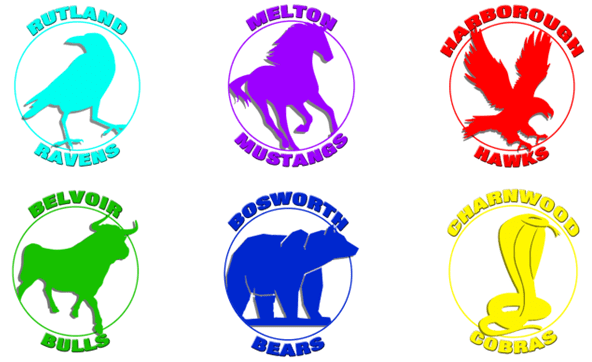
Our six Houses each have an animal mascot and motto to give students a fun, engaging symbol to motivate them:
- Belvoir Bulls – “Strength in unity, power in action.”
- Bosworth Bears – “Stand tall, stay strong, lead with courage.”
- Charnwood Cobras – “Focused, fast, and ready to strike for success.”
- Harborough Hawks – “Soaring high, leading with vision.”
- Melton Mustangs – “Driven by energy, leading with spirit.”
- Rutland Ravens – “Wise, bold, and always ready to rise.”
House Leaders
Each House is led by a House Leader, a TLR holder attached to a specific year group as part of the Team Around the Year. House Leaders play a vital role in mentoring and supporting students, particularly those who may not have formal support labels but would benefit from additional guidance.
Within our school context, where a significant proportion of students experience socio-economic disadvantage, this role is especially impactful. House Leaders proactively identify and support students who are not making expected progress or who may require additional help with behaviour, attitudes to learning or wider aspects of school life. This includes students experiencing financial hardship, young carers and those requiring additional pastoral support, such as students with a Child in Need plan.
House Leaders provide both academic and pastoral support, helping students to overcome barriers to learning, develop a sense of belonging and engage positively with school life. They also play a key role in encouraging participation in House activities, reinforcing the Rushey 1–2–3 ethos and promoting positive contribution to the wider school community.
House Captains
House Captains are students appointed to leadership roles within each House through a formal application and interview process, ensuring that roles are awarded on the basis of commitment, suitability and leadership potential. Successful applicants are supported and trained by House Leaders and attend a bespoke House Captaincy Course, alongside regular meetings with their House Leader to review progress and plan activities.
House Captains also work collaboratively as a leadership team across Houses to plan, produce and deliver elements of House assemblies and wider whole-school events. Many of these events raise funds for local charities, including LCH and Open Hands, with the school community raising a total of £2,149 in the last academic year.
Together, House Leaders and House Captains co-plan and deliver a range of high-profile House events. Recent examples include Navratri Garba and Diwali celebrations, which have attracted significant engagement from staff and students, with attendance reaching up to 200 participants. These events exemplify the role of House leadership in fostering inclusion, cultural celebration and whole-school community engagement.

Motivation and Engagement
The House system offers an incentive structure that motivates even students who may feel disengaged from traditional academic rewards. By earning points for their House, students experience the pride of collective success, while developing their character, leadership, and teamwork skills. The system ensures that every student can find a meaningful way to contribute, reinforcing the values of Rushey 1-2-3 and helping them Make a Positive Difference to themselves, their peers, and the wider school community.
Rewards
Our rewards system is designed to celebrate and reinforce the values that underpin our Rushey 1-2-3 expectations. All rewards are logged on Bromcom, where staff select either R1 – Be Kind or R2 – Work Hard. By recognising students for their kindness and hard work, we ensure that the behaviours we value most are consistently encouraged, acknowledged and celebrated across the academy. The system also provides a more complete picture of each student’s behaviour and strengths, helping us to encourage reflection and support students in developing their character as well as their attitude to learning.
Rushey 1 – Be Kind
Students receive an R1 reward when they demonstrate exceptional kindness, empathy or thoughtfulness towards others. This might include (but is not limited to):
- Supporting an upset friend or peer
- Assisting new students in settling into the school community
- Showing outstanding conduct in the community
- Reporting an incident to help or protect others
- Demonstrating exceptional politeness and respect to staff and peers
- Offering help to staff or students unprompted
Rushey 2 – Work Hard (R2)
Students receive an R2 reward when they show determination, effort or excellence in their learning. This might include (but is not limited to):
- Making excellent contributions to class discussions
- Exceeding expectations for classwork or homework
- Demonstrating excellent engagement and focus
- Going above and beyond in effort or commitment
- Trying their best and showing resilience when faced with challenges
- Using key vocabulary accurately and confidently
- Taking on classroom leadership roles or supporting peers in their learning
Ensuring Consistency
Consistency is central to our rewards system. All staff receive regular reminders and updates on how to log rewards, supported by clear guidance on when and how they should be awarded. Faculty teams review their use of rewards termly and share best practice to maintain alignment across subjects. Each faculty has also developed codified expectations for R1 and R2 rewards within their subject areas, ensuring clarity and fairness in how achievements are recognised.
New staff receive thorough training on the principles of the rewards system during induction, and regular professional development sessions reinforce the importance of using the system consistently and effectively. Curriculum leaders are provided with detailed updates on rewards within their subject, including the rewards logged by each member of their team and a breakdown of points for SEN and PP students, ensuring transparency and supporting targeted recognition.
Through this shared approach, every student has an equal opportunity to be recognised for their kindness and hard work, helping to build a positive culture in which all students are encouraged to Make A Positive Difference.
Celebrating Success
The rewards system makes achievement visible and celebrated at student, form, and House levels. It combines short-term recognition, through monthly certificates that celebrate exceptional effort within a set period, with long-term recognition, through bronze, silver, and gold awards that acknowledge consistent effort over time. Together, these approaches aim to capture the achievements of every student while keeping the system visible, engaging, and motivating. Achievements and certificates are distributed via Heads of Year, ensuring students are publicly praised during assemblies and morning addresses, with their names also displayed on the school plasma screens.
Student level
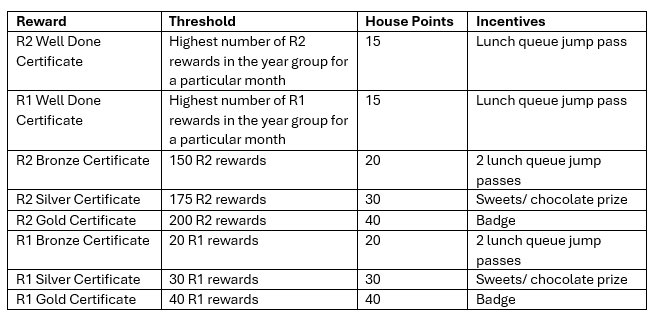
- R2 and R1 Well Done certificates are awarded monthly to the student(s) in each year group who achieve the highest number of R2 or R1 rewards within that period. Recipients also earn a queue-jump pass and 15 points for their House.
- Bronze, Silver, and Gold certificates are awarded for R1 and R2 rewards. When a student reaches the required threshold for a given level, they receive a certificate and house points: 20 for Bronze, 30 for Silver, and 40 for Gold. Their certificate is announced in assembly by their Head of Year.
- The names of all certificate winners are shown on the plasma screens throughout the school, and a copy of the certificate is sent to their families via email.
Form Level
The form-level rewards aim to provide students with visible and recognisable goals to aspire to, while encouraging healthy competition between forms throughout the year. The form-level rewards provide students with short-term goals to aspire to each term, helping to build momentum and sustained engagement towards the end-of-year trophies and awards.
- The Rewards Shield is awarded each half term to the form group in each year with the highest number of R2 rewards. The shield functions as a “moving” award that resets each half term to maintain engagement and motivation.
- Attendance Trophies are awarded half-termly to the form class within each House with the best attendance (e.g. best attendance across all Charnwood forms). The trophies rotate between forms each half term.
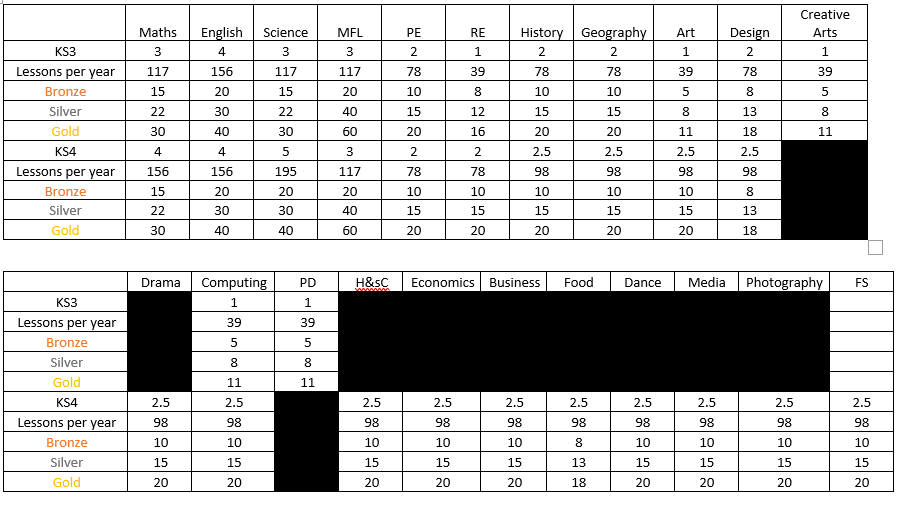
Rewards Thresholds for Subjects 2025-2026
The Duke of Edinburgh’s Award is recognition of a young person’s successful journey of self-discovery and development. Achieving the Award isn’t a competition or about being first, it is all about setting personal challenges and pushing personal boundaries. Through the D of E programme students have fun, make friends, improve their self-esteem and build confidence. They gain essential skills and attributes for work and life such as resilience, problem-solving, team-working, communication and drive, enhancing CVs and University or job applications.
There are three progressive levels of D of E programmes which, when successfully completed, lead to a Bronze, Silver or Gold Duke of Edinburgh’s Award. At Rushey Mead we offer the Bronze Award to our Year 9 students.
Students must have at least their Stage 1 Leadership badge and must be able to demonstrate leadership skills and experience.
In order to achieve the award, participants need to complete a programme of activities in four sections that involve:
Helping the community/environment (volunteering),
Becoming fitter (physical),
Developing new skills (skills),
Planning, training for and completing 2 expeditions.
With the help of DofE Leaders, participants select their own programme of activities and set themselves objectives as the award is all about self-development.
In order to achieve the Bronze Award, students must attend all of the training sessions, plan and prepare for a practice expedition and complete an assessed expedition.
Rushey Mead is a Licensed Organisation and participants pay for a Participation Place. This fee includes registration with E DofE (an online recording and reporting system), the cost of the expeditions, the assessors’ costs and all resources. This fee is non-returnable.
If you would like further information about the D of E Award please click here to go to the D of E website: http://www.dofe.org
 Make A Positive Difference